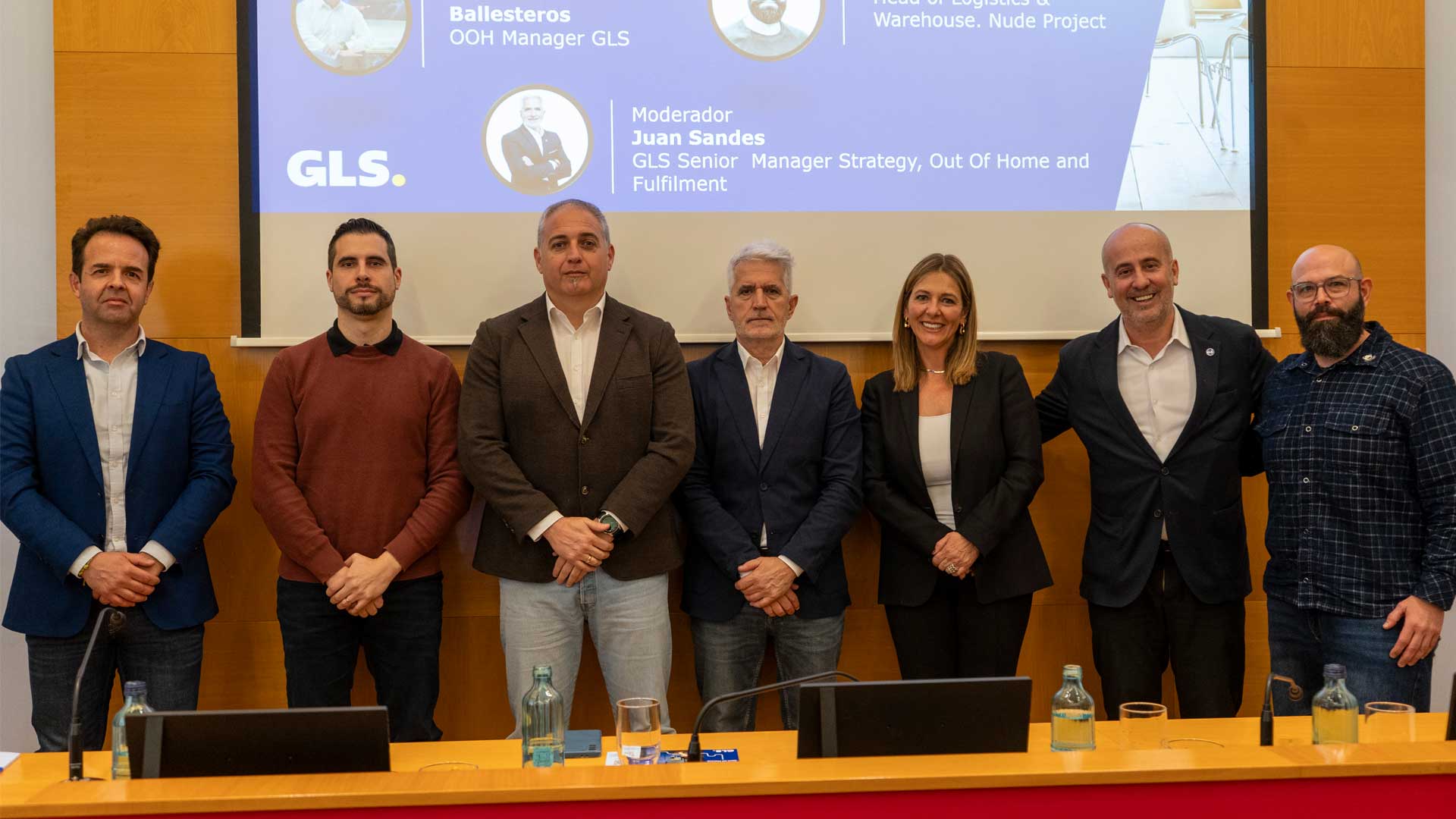
Barcelona, March 24, 2026. GLS Spain held today at Foment del Treball Nacional in Barcelona an event focused on the Out Of Home (OOH) model, which consists of the delivery and collection of parcels at convenience points and parcel lockers, and its contribution to more efficient, flexible and sustainable urban logistics. The event served to share the main conclusions of GLS Spain’s study on consumer perception, consumption habits and sector outlook regarding the OOH phenomenon, as well as to open a dialogue with experts on last-mile trends and challenges.
During the event, GLS presented data reflecting the direct impact of this model on local retail activity in the region. According to the study, nearly half of Catalans (46%) say they have purchased a product in the store when going to collect a parcel, a behavior that helps boost the local economy.
In addition, 86% of Catalan consumers believe that this model has a positive impact on local commerce, highlighting increased visibility for local businesses, higher sales and greater foot traffic as key benefits. These figures confirm that every parcel collection also represents a commercial opportunity for nearby businesses.
The report also reveals that 64% of Catalans who shop online have already used a convenience point or a smart locker, consolidating this collection model as a growing alternative to traditional home delivery. Within this segment, smart lockers already account for more than one third of Out Of Home delivery options.
Juan Sandes, Senior Manager Strategy, OOH and Fulfilment at GLS Spain, stated during the presentation: “Out Of Home is consolidating as a solution that adds value to the entire ecosystem: it offers flexibility to consumers, reduces failed deliveries and helps local businesses gain traffic and sales opportunities. With this event, we aim to share data and experiences to continue advancing towards a more efficient and sustainable last mile.”
Roundtable: challenges and opportunities for last-mile delivery in urban environments
Following the presentation of the study, a roundtable discussion was held addressing the main challenges of urban distribution: evolving consumption habits, the need to reduce failed delivery attempts and kilometers traveled, coexistence with commercial activity in neighborhoods and city centers, and the role of OOH networks as a lever to improve operational efficiency.
The panel included Iván Lorca, Chief Revenue Officer & Co-Founder of Kanguro; José Luis Ballesteros, OOH Manager at GLS Spain; Encarna Luque, Agency Manager at GLS Spain; Juan Carlos Darriba, President of the GLS Spain Network Council; Luis Nofuentes, Head of Logistics & Warehouse at Nude Project; and Miquel Nosas, Logistics Manager at DABA (exclusive distributor of Nespresso). All agreed on the importance of promoting delivery models that combine capillarity, user experience and sustainability, as well as close collaboration between operators, retailers and local entities.
In this context, the participants highlighted the role of the Out Of Home model as a transformative lever for both logistics and retail, underlining its impact on the shopping experience, operational efficiency and the dynamization of local commercial ecosystems.
For Luis Nofuentes (Nude Project): “As a brand with a strong share of sales in our online channel and a clear commitment to omnichannel, we need logistics solutions that support our growth and meet customer expectations. Out Of Home allows us to offer greater delivery flexibility, reduce incidents and improve the shopping experience, while also increasing our operational efficiency.”
In the same vein, Miquel Nosas (DABA) stated: “The Out Of Home model enables us to offer a more flexible and convenient customer experience, while driving more efficient and sustainable logistics, with a positive impact on local commerce and the urban environment.”
For his part, Iván Lorca (Kanguro) noted: “Out Of Home not only improves the logistics experience, but also creates a clear opportunity for optimization. When the system begins to better determine the most suitable point for each shipment, incidents are reduced, conversion improves and the efficiency of the entire network increases.”
José Luis Ballesteros (GLS Spain) emphasized: “Collection points turn logistics into a driver of local development: they generate foot traffic in neighborhoods, encourage additional purchases and enhance the user experience.”
From the network, Encarna Luque (GLS Spain) added: “The foot traffic generated by these collection points helps sustain the activity of local businesses, improves product turnover and strengthens the capillarity of the local commercial network.”
In this regard, Juan Carlos Darriba (GLS Spain) highlighted: “The development of Out Of Home reinforces the role of the GLS Spain network as a key element of the logistics ecosystem, generating shared value among operators, partners and local commerce.”
The full study is available for download at the following link:
https://cloud.comunicaciones.gls-spain.com/out-of-home
About GLS Spain
GLS Spain is a subsidiary of the GLS Group, a leading provider of national and international parcel, freight and express delivery services, operating in more than 50 countries. Thanks to its extensive network of logistics centers and strong local market expertise, GLS connects its customers with millions of shipments daily through a high-quality, personalized and flexible service across Europe, Asia and the Americas.
As a group, GLS delivered 926 million parcels in the 2024–2025 financial year, supported by a structure of more than 1,700 facilities, a fleet of over 42,000 trucks and delivery vehicles, and an Out-of-Home network exceeding 117,000 parcel collection and delivery points.
In Spain, the GLS network includes more than 600 own facilities and agencies, complemented by over 10,000 GLS Points (convenience points and smart lockers), as well as more than 4,900 delivery vehicles and couriers.
The Madrid KM0 Hub, with a surface area exceeding 33,000 m², is the main logistics center and headquarters of GLS Spain. It features advanced logistics technology, including automated sorting systems capable of handling up to 50,000 parcels per hour, enabling an operational flow of over one million shipments per day during peak periods.
GLS operates three Artificial Intelligence Hubs in Europe, each specialized in a key business area. The CX & Sales AI Hub in Spain drives the Group’s digital transformation in customer experience, marketing and sales.
For more information, visit: www.gls-group.com/ES/